Science & understanding
Stress and autonomic nervous system imbalance: vagus nerve stimulation research
Historical research on stress, autonomic activity and inflammation, with the original references retained.
EVANES Editorial · November 13, 2024 · 2 min read

Historical article, originally published in 2024. Clinical and experimental vagus nerve stimulation research discussed here is not evidence that EVANES treats disease. EVANES is a non-medical wellness device, not a substitute for medical care or prescribed medication.
The inflammatory reflex or neuroinflammation in the pathogenesis of stress and tinnitus, and possible attenuation by taVNS.
Although the common pathways between stress exposure and pathophysiological processes leading to tissue damage are still debatable, several results indicate that stress can activate an inflammatory response in the brain and in the periphery (Calcia et al., 2016, for review). In this damaging process, stress-induced pro-inflammatory factors including C-reactive protein, IL-6, TNFα, IL-1β and NF-κB, have an important role (Miller et al., 2008). In common, over-activated immune system, increased sympathetic nervous system activity and reduced glucocorticoid (GC) responsiveness may work tandemly in the activation of inflammatory responses during stress.
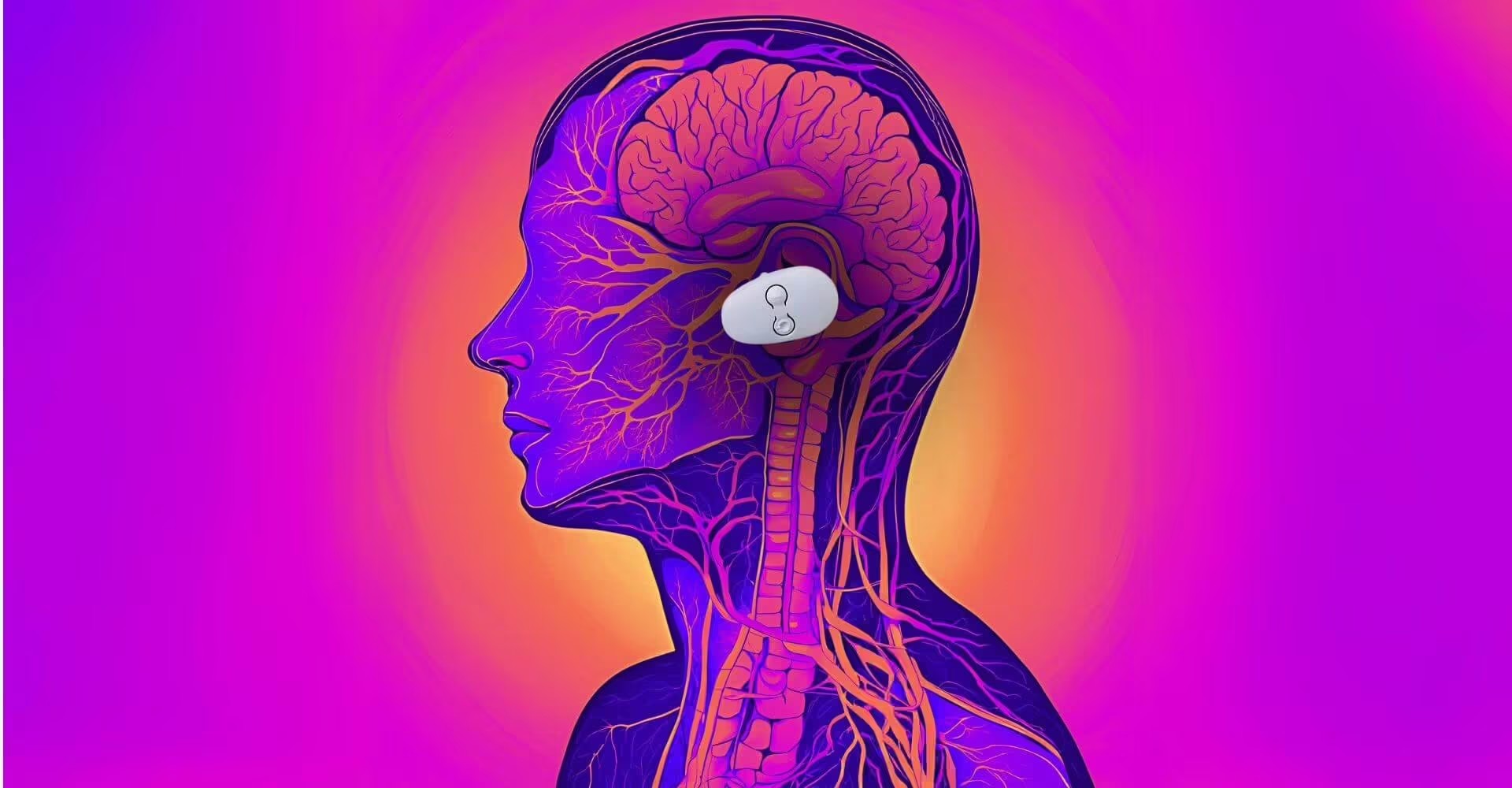
Chronic strong stress often leads to imbalance of the autonomous nervous system with reduction of parasympathetic activity. It can manifest itself as sleep disturbances, anxiety and even depression. Bioelectrical vagal nerve stimulation (VNS) has been studied for its potential effects on autonomic activity. Conventional invasive VNS is an approved treatment for epilepsy and depression. Transcutaneous VNS (taVNS) stimulating the auricular branch of the vagus nerve has been shown to activate the vagal pathways similarly as an implanted VNS. Therefore, taVNS might also be a therapeutic alternative in health conditions such as mental stress
References:
Calcia, M. A., Bonsall, D. R., Bloomfield, P. S., Selvaraj, S., Barichello, T., and Howes, O. D. (2016). Stress and neuroinflammation: a systematic review of the effects of stress on microglia and the implications for mental illness. Psychopharmacology 233, 1637–1650.
https://doi.org/10.1007/s00213-016-4218-9
Miller, G. E., Chen, E., Sze, J., Marin, T., Arevalo, J. M. G., Doll, R., et al. (2008). A functional genomic fingerprint of chronic stress in humans: blunted glucocorticoid and increased NF-κB signaling. Biol. Psychiatry 64, 266–272.